Tuesday, 14 May 2013

Go Go Gadget Gardener!

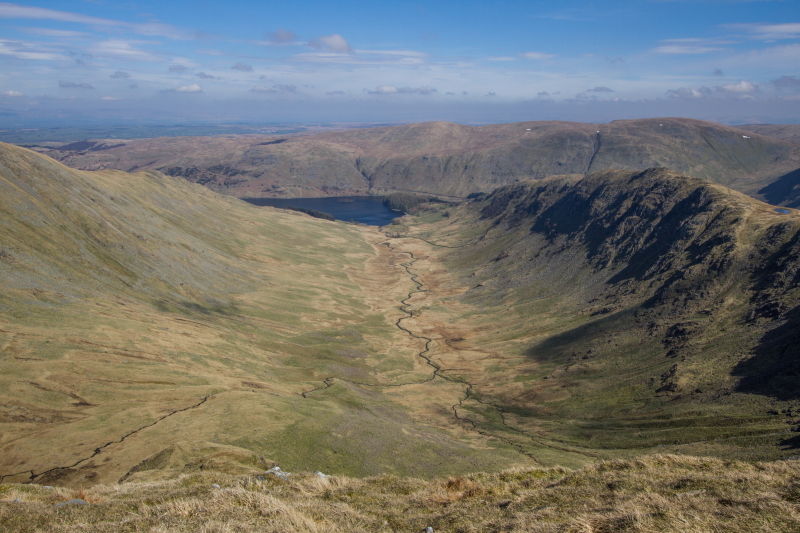
Technically a weed I suppose but...
I've been looking back over a few blogs this morning and realised I've not done a general round up on the whole "new life" thing for a while, which is a good thing really as it means I've been too busy either working, having fun or, usually, both.  Both writing and training are keeping me busy and, more importantly, keeping my bank manager happy.

As spring has finally sprung the garden has been demanding my attention.  You may remember a year or so ago I was having a minor rant about Peter Mayle and the idyllic life he portrayed in his books, well 12 months on and with more time to keep an eye on it, the garden is gradually beginning to behave itself.  We've added a number of plants to try and bring a little colour to the place (lots of evergreens and not many flowers before), and have tamed the ones we inherited.

We've also installed a vegetable plot which was hard work to create but is now all planted with us eagerly awaiting our first crop of home grown goodies.  I spent most of yesterday attacking the weeds in the garden and decided that gardening would become a whole lot easier if gardeners could undergo a "Six Million Dollar Man" (or woman) makeover.  Please feel free to add your own, but my ideas so far are:
Wannabe blackcurrants.


  • Telescopic arms - to allow you to prune high bushes/ trees without the need to balance precariously on the step ladders whilst wielding a very sharp implement.
  • Gadget hands which, at the push of a button, could switch between trowel, secateurs, fork etc.
  • The ability to hover thus allowing you to reach that annoying weed at the back without trampling the newly forked soil. (OK, the telescopic arms would allow this too, but hovering would be WAY more fun!)
  • A rubber back, so you could spend the day working in the garden without having to spend the evening engulfed in the smell of Deep Heat.
  • A garment that has a waterproof back but is non waterproof elsewhere.  This would allow you to remain outside during light showers without having a cold soggy back for the rest of the day. It would also come in handy when working under bushes after the aforementioned rain shower.
  • An invisible soundproof bubble; not to shut the outside world out (though that would have its advantages) but to protect the outside world from my inane chatter as I tell the weeds off, chat to the plants and converse with the birds.
  • Foam knees that feel no pain.  How can one tiny stone hurt so much?
  • Gyroscopic balance; particularly useful for rockeries.
  • "Weed vision" which will allow me to instantly differentiate between weeds and "oh, maybe that's where I planed those poppies"
  • A telekinetic ability to transport my bucket of weeds to the compost heap without me having to move from my finely balance spot.
With the exception of "sapling watch" (we are overrun with ash & sycamore seedlings) I shall now be taking a few days off from the hard chores to allow my back to recover.  All I need now is a spot of hot weather so I can enjoy a G&T on the patio... (And you thought my wish for telescopic arms was far fetched!)

The heathers have been particularly pretty this year.

Have always loved my Pieris.

A "Rockery" or a "Bouldery"?

Apple blossom - a magnet for birds.

Ferns.  We have no shortage of ferns.

Think is is a bluebell before it chimes.

Ornamental quince. Lots of quince jelly this year!

Wild Garlic. Less of a weed and more of a salad ingredient.

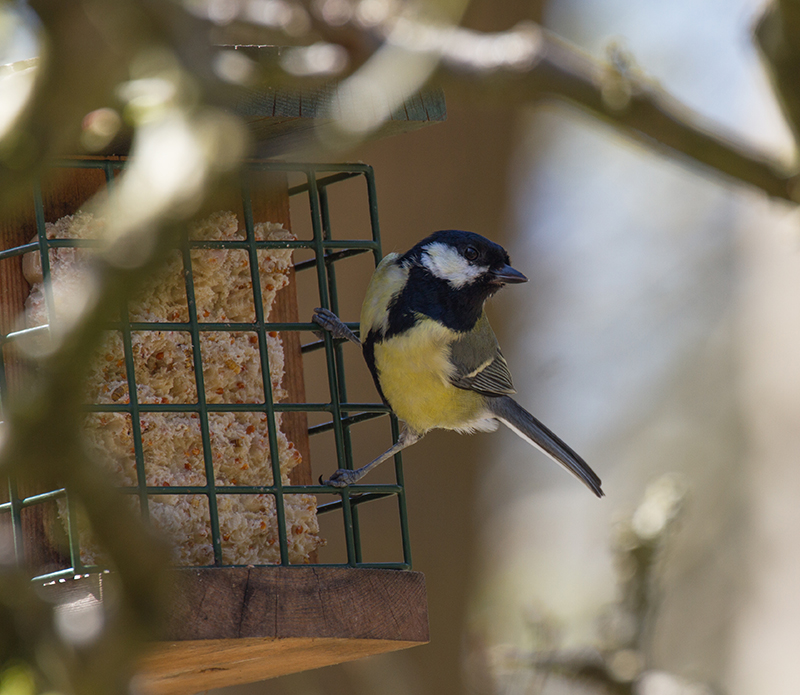
My favourite garden visitor.


Saturday, 11 May 2013

Find the time to Stand and Stare.

Riggindale Valley


When I first posted the pictures Steve took of the Golden Eagle at Riggindale I mentioned to a friend (Ray @scafellhike) how long we'd sat waiting to see it and he reminded me of the poem "Leisure" by WH Davies, which I have loved for many years.  

The poem has stuck with me this week as I've reflected on our walk around Riggindale; while we were sitting in the sun for the best part of 2 hours only one person paused nearby and peered hopefully into the valley and they were gone in a few minutes.  We saw a few other folk up on Kidsty Pike but none of them stayed longer than 5 minutes tops and by 4pm we had the entire valley to ourselves.

48 hours later I was in central London with thousands of people racing in every direction.  I don't dislike London at all, it has some spectacular architecture and hidden corners, I'm just not very good with the the crowds of people, always in a hurry and seemingly oblivious to what's around them.

WH Davies doesn't suggest you "pause and glance for a moment" he asks you to "stand and stare".  Take time out of the rushing around to truly appreciate your surroundings. How many of us have asked "Is it May already?  Hasn't the year flown by?" Life has a habit of doing that, racing past us as if it was never going to run out.  So, in the middle of the chaos of modern life, may I invite you to pour a drink, put your feet up and stare at a selection of photographs from two quite different places:  Riggindale and Gray's Inn Road, London.

Leisure - WH Davies


WHAT is this life if, full of care,

We have no time to stand and stare?


No time to stand beneath the boughs,

And stare as long as sheep and cows:


No time to see, when woods we pass,


Where squirrels hide their nuts in grass:


No time to see, in broad daylight,


Streams full of stars, like skies at night:


No time to turn at Beauty's glance,


And watch her feet, how they can dance:


No time to wait till her mouth can


Enrich that smile her eyes began?


A poor life this if, full of care,

We have no time to stand and stare.


  • Please don't go! Our books make perfrct pressies and
     you can buy them all right HERE.  You could even read them on your commute! We will be happy to sign them and they make the perfect gift for lovers of Cumbria.  Honest they do.  Also Christmas is coming.  Just saying...


Sunday, 5 May 2013

The Howling Howgills


The Howgills

It seems like ages since I wrote up a walk on here, we're so busy walking and writing up hikes for everyone else that this poor little blog has been feeling a little neglected, so, with good weather forecast for yesterday we decided to tackle somewhere new and headed for the Howgills.

My first mission was to establish which county they were in.  It seems most of them are in Cumbria but they do appear to straddle the border into Yorkshire.  Certainly all of the way markers around Cautley Spout were Yorkshire Dales markers.  Whomever they "belong" to they're incredibly pretty and have long caught our eye as we've made our way north on the M6.

We parked up near the Cross Keys Temperance Inn; a 400 year old building with an interesting history.  It used to be a licensed bar but in 1902 the landlord drown while trying to save an inebriated customer from the nearby river.  Relatives of the customer then bought the bar at auction before reselling it with the licence to sell alcohol removed from the deeds, since which time it has been a Temperance Inn.  They serve food and soft drinks though when we popped our heads around the door it was already rather packed and, temperance bars not being my natural habitat, we moved on.

The path along Cautley Holme Beck is an open and pretty ramble; perfect for families and if you're after an easy stroll with stunning views then this is a great spot.  The path winds along to the base of the falls with stunning views back across the valley.
Approach to Cautley Spout

Frogspawn ponds along the way


Cautley Spout

View from Cautley Spout


Once at the base of the falls the path steepens considerably and it's a sharp but enjoyable hike to the top of Cautley Spout, Englands highest waterfall with a drop of 198m.  The excellent views all around are the perfect excuse for regular stops to catch your breath.  Once at the top of the falls the path continues to rise, though much more gently, leading you out onto the main summit route to The Calf and it was at this point, as we were blown sideways, that we christened them the Howling Howgills, though it turns out we're not the first people to do that!


Around you tempting ridge walks disappear in every direction; it's the sort of place I could happily potter around on for days at a time.  To start off with we headed north along White Fell Head, Bush Howe and then onto the cairns at Fell Head.  The views in every direction are stunning; the Lakeland Fells, Ingleborough, the Yorkshire Dales and even Morecambe Bay away in the distance.

Retracing our steps back to The Calf we continued onwards past Bram Rigg Top to Calders; from here there are clear views along the valley to the Kent Estuary and the viaduct at Arnside.  Heading away from Calders along the fence boundary towards Great Dummacks the going got a little boggy but the suction from the bogs at least gave us a little purchase in the face of the howling gales.

View from the top of Cautley Crag

Arriving at the top of Cautley Crag the path is narrow and not for the fainthearted; the crags drop away dramatically to the river valley far below, but the views were absolutely stunning as we made our way back towards Cautley Spout.  I can honestly say that with the wind blowing hard against our faces and the sun high in the sky it really was the perfect afternoon to be out on the fells.

Friday, 3 May 2013

Inept Gardeners Question Time

Rightyho, you may remember that last autumn we created ourselves a vegetable patch, well the time has come to plant it so today I trotted off to the very lovely little garden centre in the middle of Grange-over-Sands and bought myself some stuff to plant.  On the advice of the lovely lady serving me I opted for some seed potatoes (Maris Piper), some seed onions (just looked like very small onions), a packet of carrot seeds and a packet of spring onion seeds (it's only a tiny plot at the moment).
Pint sized veg plot.

All items have now been planted but, as I planted them, a few extra questions occurred to me which I hadn't thought to ask at the garden centre and I was wondering if any of you lovely folks could help.


  1. As we dug through the home made compost we discovered a sprouting parsnip top so we planted it.  What are the chances of it growing?
  2. Does 1 seed = 1 carrot?
  3. Why do I have "seed potatoes" but not "seed carrots" - aren't they all root vegetables?
  4. Does 1 seed potato = 1 potato?  (I hope not, seems a bit silly if it does!)
  5. How will I know when they're done?
  6. What pests do I need to watch for?
  7. Do I need to do anything else now other than make sure they're watered?
  8. Will the fact that the Morecambe Bay silts underlie the whole plot affect the growth of the plants? (that's why it's a raised bed - our garden used to be tidal 100 or so years ago).
  9. Will they really taste better than shop bought?
  10. Why is it called the "simple life" when it requires so much effort?
I appreciate these are probably very silly questions, but I'm a novice here and what I lack in knowledge I make up for with enthusiasm!  Many thanks in advance for any and all help.

You may be wondering where my adorable husband was whilst I was busy with the planting, well he was getting up close and personal with the local wildlife and got these rather lovely pics.  I say "lovely pics" but if any of those critters start eating my seeds, there'll be trouble!

Love this one - he looks like a proper bruiser!

"Just one more tug and I'll have it"

Not too sure what this one is...

Ahhh Wagtails - thank you for wagging your tails!

And this lovely fellow is waking us up each
morning with his tap tap tapping.

Monday, 29 April 2013

The Rules of Bird Watching

As you'll know if you've read any of my other blogs, we've been getting to grips with the local bird life over the past year or so, during which time we've learned a lot about birds and bird watching.  Having spent another fabulous day down at Leighton Moss I thought now was a good time to share with you some of the "rules" we've picked up along the way.


  1. If, when you enter a hide, all the "bins" and "scopes" are pointing in different directions, there's probably nothing important to see.
  2. If, when you enter a hide, all the "bins" and "scopes" are pointing in the same direction, whip yours out quickly and join in, nodding sagely whilst desperately scanning the horizon.
  3. The name of the bird often bears little resemblance to their appearance; female Blackbirds are brown and, as we discovered today, Green Winged Teals do not have green wings.
  4. Trying to describe to someone where you've spotted a bird in the distance is the quickest way to start an argument. "No, not *that* tree, the one with the branches, just to the left of the one with the leaves.  Never mind, it's gone now!".
  5. However long your camera lens is, there'll be someone there with a longer one.
  6. The second you look down to take your flask out of your bag a Bittern will tap dance past the hide.
  7. The quieter the hide, the louder the crisps.
  8. Most seasoned birdwatchers don't mind you asking questions and are usually fairly forgiving when you make a mistake.  ("Is that the Bittern?" Long slow intake of breath. "No, that's a Snipe...")
  9. The smaller the bird the prettier the song.  Big birds seem only capable of screeching.  Pheasants in particular will lie in wait behind a bush and time their screech perfectly to scare the bejeebers out of you as you pass by.
  10. DO NOT look on the "Spotted Today" board as you enter the reserve.  These are malevolent works of fiction and serve only to reinforce your feelings of inadequacy when the most exotic things you can come up with are a Lapwing and Shoveler.
Lapwings. Still bonkers, still my favourite bird.


Sunday, 21 April 2013

"Welcome to Lake Districtland"

When many people visit the Lake District they wander around the local villages imagining what it might be like to live here.  They stop and gaze into the window of the local estate agent to see what property prices are like and what they could maybe afford.  They imagine an idyllic life; dropping the kids off at the local village school, chatting to the newsagent as they pick up their paper and passing the time of day with their neighbours when they meet them in the street.  But often this is far from the reality.

The massive rise in second home ownership means that out of season many villages become soulless ghost towns.  Services that require year round demand suffer and close as a result: schools, post offices, shops, bus services etc.  And people who were born and raised in the area simply can't afford to stay and raise their own families in the villages where they themselves grew up.

How bad is the problem? In Elterwater second homes & holiday lets account for 80% of properties in the village, just under 70% of homes in Skelwith Bridge are second homes and in Coniston 50% of all residences are now second homes.  (Information taken from Westmorland Gazette) In the summer months these places are thriving centres of activity but in the winter they are deserted with what few residents remain being surrounded by cold, empty houses. We did our house hunting during January 2011 and it very quickly became apparent which places still had a solid community and which had become little more than holiday villages.

Tourists are the lifeblood of the region and without them what little employment exists in the area would vanish altogether, but we need to find a way to balance the demand for holiday lets with the needs of the local community. One local businessman and holiday home owner quite rightly argues that he provides a lot of employment for local people by way of the trades; housekeepers, window cleaners, gardeners etc.  But the truth is all of those are lowly paid professions and it's unlikely that many of those employees will earn a sufficient salary to be able to afford to buy a property anywhere near to where they're working; the average person on a cleaners wage won't be in a position to outbid a millionaire property developer next time a tiny stone cottage comes onto the market.  

There's a marked difference in property prices as soon as you set foot inside the National Park and the pattern that's emerging is that local people employed to support the tourist industry can only afford to live in the towns around the outside of the park: Kendal, Penrith etc.  Granted there are a number of homes in the region available at a lower price for those who live and work in the area, but this is a tiny proportion of the overall housing available and doesn't even begin to address the demand.  So what's the problem with people having to commute?  Millions do it every day in London.  True, but rural communities simply don't enjoy the same transportation infrastructure as the south east meaning car ownership is pretty much essential; an additional expense on an already tight wage.
Thirlmere - previously the site of Wythborn village.

And anyway, so what if holiday homes make up 80% of Elterwater?  Well the problem is we're losing (already lost!) an entire community.  In 1879 and 1929 when the proposals were made to flood Thirlmere and Haweswater respectively, there was outcry and opposition as it would mean destroying a local community; but isn't that exactly what's happening now?  A community isn't the bricks and mortar, it's the people and without the local communities some villages are in very real danger of becoming little more than a Butlins style holiday park.  

People fight to protect the habitats of different animals around the globe, but what about the habitat of the rural English village?  The reality is that the government has said it has no plans to limit second home ownership or occupation so is it time to give in gracefully, accept that change happens and watch as Lake Districtland evolves - or does the revolution start here?


Monday, 1 April 2013

Impact of Global Warming on Morecambe Bay

Despite the recent arctic conditions we are, as a planet, still in the grip of global warming.  Whatever your belief in the cause of this phenomenon temperatures across the planet are set to rise over coming decades and with that will come a change in local flora and fauna - but what will that mean on a local level?  As followers of this blog will know we have recently taken a keen interest in the local wildlife and have specifically been learning more about local birds so it was with some interest that I learned that the future for Morecambe Bay might look something like this:

Morecambe Bay 2020
Where currently we enjoy watching Oystercatchers and Snipe, by 2020 Flamingos are likely to be a common sight.  Naturally drawn to mudflats the broad bay is wide enough to accommodate their large flocks and the shallow water will suit their feeding habits perfectly.

How will they get here?  Well in much the same way that escaped parakeets formed the basis of the now famous flocks Kingston Parakeets in the South East, experts have suggested that it is only a matter of time before a breeding pair of Flamingos escape captivity from a local reserve, such as Martin Mere, and take up residence in the bay.

The issue of new and exotic species colonising our shores has caused such concern that DEFRA has set up a special sub-committee to monitor developments.  Any sightings of Flamingos in the bay should therefore be reported immediately to the Association for the Protection, Rehabiliation and Integration of Life From Other Overseas Lands. Thank you.