Showing posts with label Great Gable. Show all posts

Sunday, 18 March 2018

Samuel Johnson was wrong

I've been travelling a lot for work lately and, last week, I was in London for a couple of days working in a trendy hotel which had lots of quotes around the wall and no visible reception desk (I appreciate it makes the foyer look larger but why on earth do away with a reception desk?  A couple of folks in suits perched at a table tapping away on their laptop could be anyone. Would you like me to go around pestering all of your guests until I find the one who happens to be on reception duties or simply hang around looking lost until someone takes pity on me?  But I digress...)

The quote which dominated the wall in the dining area was this "Sir, when a man is tired of London, he is tired of life; for there is in London all that life can afford" - well known words from Samuel Johnson.  He was speaking to his biographer James Boswell, trying to convince him that he wouldn't miss his native Scotland if he moved to the big smoke, but I couldn't help thinking that however leaned the man may have been, he definitely got it wrong with this one.  London is lovely in so many ways but it definitely doesn't have dibs on "all that life can afford" - for starters here are just a few of the things which Cumbria has that London doesn't.

Hills

London has plenty of places named hill but no real, proper, hills.  Primrose Hill is 65m high, Notting Hill isn't even a hill (it's only 36m above sea level) and the highest point in London, Betsom's Hill, is only 215m high and surely only counts as being "in London" on a technicality.  And, have you noticed how so many place names in London (and other cities for that matter), have retained the name of the thing which was flattened in order to make way for whatever is now built on top of them?  Places like Waltham Forest (although there are still a few small parks left), St Martin-in-the-Fields (which is on a busy junction right next to Trafalgar Square and miles from the nearest fields) and Wood Green which, despite having been both woodland and a large green space in the past, is now a "...busy urban activity centre with sizeable shopping area..."  I'm guessing updating those names would be bad for business; "St Martin-in-the-middle-of-a-crossroads" doesn't have the same ring to it.

So, Mr Johnson, London definitely appears to be lacking hills; the soaring peaks of the central Lake District, the comfortable familiarity of the Langdale Pikes and the gorgeous rolling hills around the Duddon Valley for starters...

View from Great Gable

Langdale Pikes

Orrest Head

Duddon Valley

Lakes

There may be a few small lakes in London but anything you can walk around in under an hour without getting your boots muddy doesn't really count in my book.  Up here we have so many lakes they named an entire national park after them "The LAKE District" - in fact they are SO fab that we even got UNESCO World Heritage Status - tell that to Mr Boswell next time you see him.  As a comparison the Serpentine in London covers an area of 16 hectrares while Elterwater, the smallest "lake" in the Lake District, covers 17 hectares.  We are also home to the largest and the deepest lakes in England - Windermere and Wastwater respectively.

Windermere

Wastwater
Grasmere
Peace

When I'm away in London on my travels, this is the thing I miss the most.  There is nowhere in London where I can find true peace and quiet - granted there are some lovely parks and quiet back streets, but at no point can I escape the distant hum of cars or take a deep breath knowing that there is no-one else for miles around.  To be fair, back in 1777, when Samuel Johnson muttered his now infamous words to his friend and biographer James Boswell, London probably did have a lot of really quiet corners (Wood Green was probably still woody and greeny for a start) - but these days it's hard to find true peace there.

Of course on a busy bank holiday it can be hard to find true peace in Cumbria too, but there are still plenty of quiet nooks where you can escape the crowds and the drone of the motor engine and enjoy the tranquillity and solitude that is so hard to find in London.

The Eden Valley

Smardale Gill

Black Combe


Unlike Samuel Johnson, people are not going to be quoting our books in 250 years time but, then again, you never know!  They are full of fab photos and fun facts and we are happy to ship directly and cut out the Amazon middle man.  Click the pic to find out more & order yours.  😀

Click here to find out more


Sunday, 30 October 2016

10 Reasons to love Cumbrian Clouds

Just because it's cloudy, doesn't mean it's dull.  Some of the most spectacular views of Cumbria involve clouds and here's why...

1. Because they give the sun something to peek out from
I took this pic from the top of Helm Crag - Steve was busy climbing to the top of the Howitzer but nature shone the spotlight elsewhere

Looking towards Blea Rigg

And just to prove he made it to the top...


2. Because they make Morecambe Bay look awesome
The artist Turner was inspired by the vast skies over Morecambe Bay and who can blame him?
Morecambe Bay


3.  Because of Icebows
Yes they're a real thing - and they look fabulous.  Steve captured this one at the top of Kirkstone Pass

Kirkstone Pass

4.  Because of Broken Spectres
We'd had such a long and soggy walk when this photo was taken.  We were up on the top of High Stile when the clouds shifted, the sun peeked out and this happened.  
High Stile

5. Because of inversions
C'mon - I couldn't write about clouds without mentioning these now could I?  Spring and autumn are especially good for inversions and Gummer's How and Red Screes are particularly good places to head for to spot them.

From Red Screes

From Red Screes

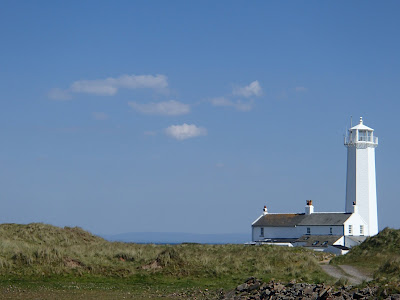
7.  Because sometimes a fluffy little cloud is all you need to finish off a photo
These tiny clouds just look perfect in this shot of the lighthouse on Walney Island
Walney Island

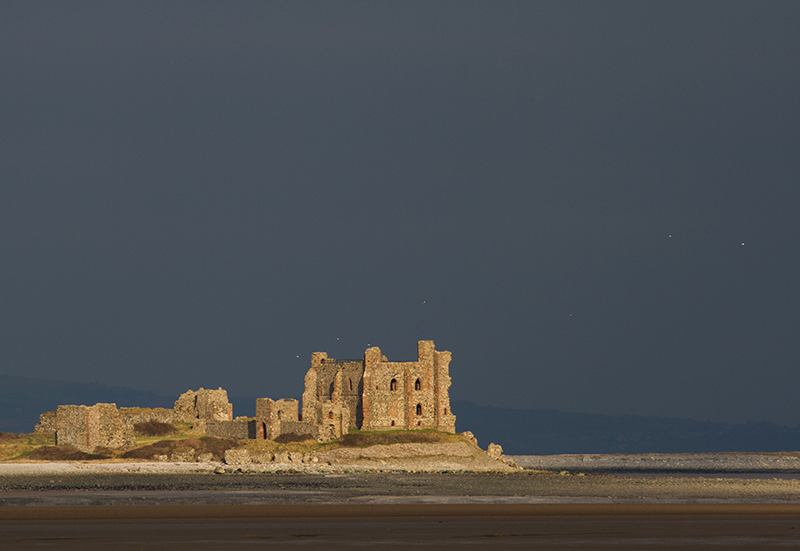
8.  Because no clouds = no drama
Neither of these views would have been quite as dramatic without the cloud.  The top one is Piel Castle, snapped as the sun caught it briefly on an otherwise cloudy and moody day.  The lower one is Place Fell from Ullswater on a monochromatic afternoon.
Piel Island

Ullswater and Place Fell

9.  Because they go great with the snow
These couple of shots were from a snowy hike around Great Gable a couple of years ago, but wouldn't have been quite the same without snowy white clouds complementing the snowy white snow.

Great Gable

Styhead Tarn

10. Because a sunset just isn't the same without a cloud

We've all got dozens of sunset photos, but the very best ones usually have clouds in them - lovely whisps of pink catching the last rays of the sun or dramatic clouds framing the sun as it sinks beneath the horizon.

Sunset from Wansfell

Morecambe Bay


Wednesday, 19 October 2016

Five Favourite Lake District Fells

Impossible to choose?

With so many stunning fells around, how on earth do you start the process of choosing your favourite? Well over the many hours we've spent wandering up and down the fells we've come up with three key criteria for rating them:
1. Looks - how gorgeous is it to stand back and look at?
2. Views - how spectacular are the views from the flanks and the summit?
3. Interest - how interesting is the hike?
I accept that many people will disagree with me and many will rate some fells more highly because of a personal event or special connection, but I've tried to keep this as objective as I can. That said, beauty will always be in the eye of the beholder so, with that in mind, let battle commence!

Blencathra


Wainwright wrote more about Blencathra than he did about any other fell and that's probably because there is so much to say about this magnificent mountain. At 868m high this is the 14th highest of the Lake District fells and stands guard over the A66 just to the north east of Keswick. So how does it stack up in each of the categories?
Looks: Some of the best views of the fell are from Clough Head opposite or Raven Crag at the top end of Thirlmere (where the above photo was taken from). There are also stunning views as you approach along the B5322 through St John's in the Vale. The crenulated ridges sweep from the summit to the valleys below and whichever angle you approach it from, there is always a dramatic view.
Views: One of the striking things about Blencathra is the variety of views from the summit ridge. To the west is Skiddaw while to the south is the broad valley of St John's in the Vale and the ridge route from Great Dodd to Helvellyn. Below you the A66 winds its way eastwards and away towards Penrith but to the north the views are quite different; gone are the high jagged fells, replaced instead with gentle rolling moorland towards Caldbeck. If it's variety of view you're after then Blencathra has it in spades.
Interest: Blencathra is of course home to "Sharp Edge", a narrow ridge of smooth rock, exhilarating to cross in good conditions but best avoided at all other times, which isn't a problem because there are so many other options to choose from. Halls Fell Ridge is a dramatic if energy sapping route rising from Threlkeld directly to the summit or, if you fancy something a little less challenging how about a stroll along the narrow valley of the River Glenderamckin and then on to the summit via path to the left of Scales Tarn? No wonder Wainwright had so much to say about it.
Great Gable

Possibly the first fell I fell in love with. I can clearly remember hiking up Scafell Pike and gazing across at Great Gable as we made our way up around Sprinkling Tarn. It also has a fascinating history; in June 1924 a group of men and women from the Fell and Rockclimbing Club gathered to dedicate a bronze plaque to all its members who had been lost during the "Great War". The survivors had raised the money to buy 3000 acres a land, the deeds to which were presented to the National Trust as a living memorial to those lost. Each year on Remembrance Sunday a service still takes place on the summit. (There's more detail on that history here.)
Looks: It's just the right shape for a mountain, when kids draw mountains, they look like Great Gable. It sits, imposingly beautiful, at the head of Wast Water slap bang in the middle of "Britain's Favourite View". As looks go, this one's a stunner.
Views: It's no slouch in the views department either A 360o panorama of most of the famous peaks in the Lake District surrounds this fell and stretching away below you to the south west is Wast Water, one of the most remote lakes in the region. What makes the view down over Wast Water so stunning is the simplicity of it all; no rolling hills or farm buildings dotted around, just peaks, screes and water.
Interest. I must admit I'm very fond of the route through Gillercomb and over Green Gable, especially when Sourmilk Gill is in spate, but honestly, can there be any other choice than the approach from Wast Water with the fell looming ever larger as you approach, almost daring you to climb it. And for the more adventurous/ properly kitted out there are an assortment of craggy climbs to the summit. Whatever your mood there'll be something to suit.
Place Fell

This one had been on my list for a long old time before I got around to climbing it, and what a perfect day we chose for it too. Sitting opposite Helvellyn at the south end of Ullswater it's easy to be lured away towards it's more famous neighbour, but that would be missing a real treat.
Looks: Just look at the picture; it's a stunning fell. Driving down Kirkstone Pass it draws your eyes and imagination as you picture yourself making your way towards the summit. Seen from Ullswater it doesn't disappoint either, rising dramatically from the water line to the summit 657m above.
Views: Sometimes you don't appreciate the full beauty of the high fells from the bottom of the valleys; what you need is a medium sized fell to give you a better perspective and Place Fell is perfect for that. From its summit you are ideally placed to admire the sweep of the Helvellyn range to the west & south whilst below you Ullswater wraps itself around and draws your eyes away to the north and Penrith away in the distance.
Interest: Perhaps Place Fell doesn't have quite the same number of routes criss crossing its flanks as some fells, but what routes there are, are well worth the hike. The steady rise of the routes from Deepdale Bridge or along Boredale Beck contrast sharply with the steeper hikes from Sandwick towards High Dodd. And once you're done with the summit the lakeside path back to the car is the perfect way to end the day.
Helvellyn

One of the most evocative fell names in the Lake District and the first major fell I climbed. It's also the fell I've climbed most often for a whole variety of reasons, not least of which is the fact that you can pretty much guarantee a free parking space if you're heading up from the Dunmail Raise route. As a child growing up in the West Midlands I'd heard the name Helvellyn and it counjoured up images of dramatic scenery and angry Norse gods.
Looks: Helvellyn may not stand alone but it certainly stands out. Viewed from the Glenridding approach you are greeted by the most perfect glacial corrie with Striding Edge along one side and Swirral Edge along the other; text book stuff. But viewed from the Thirlmere approach it's a completely different place; forested slopes giving way to broad rounded shoulders leading the way to the summit ridge.
Views: Where do I start? If you can name a Lake District fell there's a good chance you can see it from Helvellyn. Well, OK, maybe not all 214 Wainwrrights, but certainly most of the high peaks. They disappear off into the distance in regimented rows all waiting patiently to be climbed next time you pull your boots on.
Interest: There are so many interesting and varied routes to the summit that if this was the only fell you could ever climb it would take you a very long time to get bored. The most dramatic route is via the infamous Striding Edge; a spectacular approach dotted with memorials to remind you to pay close attention to what you're doing. Personally I enjoy the climb along Raise Beck then up via Grizedale Tarna and Dollywaggon Pike as it's usually a much quieter route and is most spectacular in the snow. There's also a much more gentle route up from Glenridding to Red Tarn but beyond that there is a sharp summit scramble via Swirral Edge.

The Langdale Pikes

Yes I know I am cheating massively with this one as the Langdale Pikes are comprised of 4 main summits: Loft Crag, Pike of Stickle, Harrison Stickle and Pavey Ark but look at the photo - how can you separate them? They sit together guarding the western end of one of the most beautiful and popular valleys in the Lake District and it would be a sin to try and separate them.
Looks: The Langdale Pikes are a work of art; perfectly formed, perfectly grouped and a joy to sit back and look at as you enjoy a flask of coffee on a nearby fell. In fact it's worth climbing a nearby fell simply to sit and look back at the Langdales. (Side Pike is a good one, or Pike of Blisco if you're feeling more adventurous and the weather is a little warmer.) The deep gulleys of Dungeon Ghyll & Stickle Ghyll point your eyes towards the peaks above them and there is nothing better on a warm afternoon than a flask of tea and some malt loaf and a view like this.
Views: The Langdale Pikes provide a perfect viewing platform themselves for Crinkle Crags and Bow Fell with Scafell Pike peeking out behind. The fells in this part of the Lake District are craggy and sharp and there is nowhere better to appreciate that than from the top of one of the Langdales. And of course there is the Langdale Valley itself, disappearing off around the bend towards Elterwater; a beautiful ribbon of lush green in contrast to the surrounding craggy fells.
Interest: The climb up along Stickle Ghyll is one of the most popular walks in the Lake District and the large car park at the bottom soon fills up on warm sunny Sundays, If you don't fancy the Pikes themselves then hike up to Stickle Tarn follow the path to your left over to Dungeon Ghyll and descend via Pike Howe. There are more challenging routes up onto the Pikes via Mark Gate or Pavey Ark and there is, of course, Jack's Rake; a dangerous and unforgiving route only to be attempted by experienced hikers with all the right equipment.
Perhaps one of the best things about climbing the Langdale Pikes is the collection of rather lovely pubs around their base, all of which are delightful, though if you want to indulge yourself in a little hiking history and folklore then the Old Dungeon Ghyll is the place to be.

Right, that's me done - over to you - which are your favourite fells and why?  Let battle commence!

Tuesday, 5 November 2013

More than just a war memorial


Great Gable & Styhead Tarn

June 8th 1924 is an important date in any mountain enthusiasts diary, it is the day that George Mallory and Andrew Irvine were last seen alive as they headed towards the summit of Everest.  At around 12:50pm they were sighted by Noel Odell as two tiny specks moving upwards before the clouds blew across obscuring them from view and transporting them into the realms of folklore.  No definitive evidence has ever been found to prove whether they made it to the summit or not and most members of the outdoors community have an opinion on the matter one way or another.

Great Gable. My 1st ever view of it.
June 8th 1924 is also important for another reason rather closer to home.  As Mallory and Irvine fought for survival on Everest 80 members of the Fell and Rock Climbing Club (FRCC) unveiled a plaque on the summit of Great Gable commemorating their members who had died during World War I.  By all accounts it was a typical British June day, the rain was pouring and the wind was howling, but the weather abated long enough for a short service to take place allowing those assembled to unveil the plaque and pay their respects.

One of the most prominent members of the FRCC present on the Great Gable was Geoffrey Winthrop Young, a writer, poet and mountain climber who had been a close friend and mentor to George Mallory.  This was his first climb since losing his leg during the war and obviously at that point he had no idea about the tragic events unfolding on the other side of the world.

But the FRCC did far more than simply unveil a plaque.  Following the Great War they purchased 3000 acres of land in the area and handed the title deeds over to the National Trust to commemorate the lives of those that had died.  The exact map of the area purchased and more details of the ceremony that day can be found here.


Every year on Remembrance Sunday hundreds of people gather at the memorial on the summit of Great Gable to pay their respects and remember those who have died in conflicts around the world.  I'm afraid I'm not a fan of crowds so we decided to pay our own quiet a few days early on a glorious November day.

We took the regular route from Seathwaite up to Styhead tarn over Greenhow Knotts, from there we followed the path alongside Kern Knotts to the summit before dropping back down via Windy Gap and Aaron Slack and then the adventurous/ boggy/ what were we thinking Taylorgill Force route back to the farm. It was a perfect, crisp autumn morning and the views from the summit were a who's who of the Lake District fells.


One of the things I love most about the fells is that, for a while at least, I feel as if I am far removed from the craziness of modern life.  There's no reception on my mobile phone, I can't see any office blocks and the endless views take my mind away from my day to day worries.  When I'm on top of a fell I find it blissfully hard to remember what it's like being crammed into a rush hour tube train, never mind trying to imagine what it must have been like to be terrified and freezing in a rat infested trench.

The whole point of memorials is to make us remember because as soon as we forget then there's a danger we'll start making the same mistakes all over again, so I tried to find some statistics that should stick in the mind, I think these should do it:
Great Gable from Wast Water

  • 995,939 British soldiers were killed during WW1
  • During the course of the war that's an average of over 600 men every single day
  • Most of the men killed were aged under 30 and many were as young as 18
  • Boys younger than that are known to have lied to sign up & subsequently died
  • Across all the nations involved over 16.5 million soldiers died, that's over 10,500 every day


Because of its history this memorial on top of a 450 million year old mountain in the middle of the Lake District will, for me, always be so much more than just a war memorial.  Wars have claimed the lives of countless millions over the centuries and hundreds, probably thousands, of others have died like Mallory & Irvine, pushing the bounds of human endurance and exploration.

Yes it's a place for sober reflection to remember those who have gone before, but it's also a place to look around at the breathtaking scenery and be thankful that you're alive and free to enjoy it. Life is spectacular, fragile and very, very short so try to make the most of every single moment and always try to have fun, even if you're stuck on a fell in a howling storm; just fix your mind on the hot bath at the end and try to smile as the rain drips off the end of your nose. (And if you ever happen to bump into me on a cold wet fell cursing as I stumble along in the pouring rain, please feel free to remind me of this blog.)


Update Nov 2021: I recently discovered this wonderful piece, written by my Grandad when he was in his late 20s. It describes Armistice Day 1935 in the factory where he worked.


Friday, 25 January 2013

Icicles, snowmen and inquisitive sheep on Yewbarrow

Britain's Favourite View in winter attire

(Blog & pics by Steve) The forecast was for another clear sunny day so I decided to venture over to Wastwater. Again the forecast was wrong as it was cloudy with intermittent snow, so I spent an hour taking shots at the lake before deciding it wasn't going to get any better and began my climb up Yewbarrow.

I've only climbed Yewbarrow once before in a T shirt on a rare hot March day so this was a change. The initial climb to the base of the crags was fine though still needed spikes to assist, but beyond that I'd forgotten how much of a short sharp mountain it is without much path past the 'face in the rocks'.

The spectacular Wast Water Screes.
A little off piste I came to some great icicles around 13ft long I'd say. Further up is a tough scramble, tough enough during the best of days but in thick snow it required full concentration. Though I'm tall at 6'4 with a good reach, my fat size 13 boots can't fit in all the ideal foot holds so I knew on the way down I would need to change the bulb ;-)

13 foot icicles
After an hour of scramble and re-routing I made it to the top of the crag. I decided that due to probable time, light & blizzard restrictions I would waymark may way around to avoid the crag on the way down by placing little snowmen. The snow was knee deep here and with no one else having been up, I had to forge a new path forward this made the final part of the climb long and tiring.

Once at the top dark snow clouds loomed over Great Gable and Scafell it began to snow on me so wary of the time it had taken me I headed back down. The snowmen were a great help and a little more fun than cairns (or are some really just random piles of stones?) I ended up just below the crags in good time so stopped for a bite to eat with a inquisitive sheep for company.


Hello!

Drifting Away on Great Gable


(Blog & pics by Steve) The sun was shining in the south lakes so I thought it a great opportunity to get out and get some snowy fells lit up by the sun. As I drove around I thought I'd go further afield and go for an easy path higher up and headed to Seathwaite to get some shots of Great Gable, Styhead & Sprinkling Tarn. As I should have expected I suppose the further into the middle of the lakes you go the more likely it is to be cloudy. Darn, snow looks much better in the sun.

Once you get to Seathwaite Farm, it's a popular long steady route to get to Scarfell Pike. At Stockley Bridge you have a choice, go left straight up to Sprinkling Tarn, continuing left the path winds it way up to several peaks,Eskpike, Lingmell & Scafell Pike. Or at the bridge take a right to Styhead Tarn, Great Gable and up to Scarfell Pike via the corridor route. As you can see the left path go on & on ahead of you all the way up, I prefer going up the path to the right.

Cloud lingered over Great Gable and far below Lingmell so opted to stop at Sprinkling Tarn. As luck would have it the sun came out over Styhead Tarn where I stopped for lunch and had a chat to a nice old man. We made our way up to Sprinkling Tarn both stopping every other footstep to take another photo as the cloud disappeared and the sun and blue sky came out. A churpy chappy from Langdale stopped for a quick chat before he yomped off looking for somewhere to camp (or dig out a snow shelter I think he said) somewhere on the other side of Great Gable.

The sun was beginning to set only minutes after it had came out and was giving the snowy mountains a lovely golden glow so couldn't resist, saying goodbye to the nice man as he made his return journey I headed up to side of Allen Crags to get a view over the valleys. As the sun set, I returned down the other path to Stockley Bridge. At some point I shall try this route up, it's long and stepped a lot of the way and I'm not sure which is best, going up or down steps.

As I got to the bridge, I said hello to the nice old man again as he sat having a snack. Turned out he would have had to walk down the road to the bus stop at Seatoller or wait an hour for it so I drove him down and caught it just in time. Nothing worse to end a good hike than a long tedious road walk.


Some are better equipped for winter walking than others.

Sunday, 8 July 2012

London, more or less...

London; more or less the same as last time I visited.


We've been living in Cumbria for 18 months and last week saw me revisiting my life in the South East complete with London commute.  I spent 22 years living and working in the South East and a fair chunk of that time commuting into various parts of London so, had it changed or was it still the way I remembered it?


More people, less chat

Rush hour commute.
I'm sure some people will think this is a good thing, but I'm amazed at how quiet London commuter trains are.  Thousands of people literally rammed together and barely a word is spoken.  Compare that to my regular northern commute where I've learned plenty about the people around me; their lives, their families, what her at number 43 is doing and the fact that Bruce Dickinson apparently played a gig in Kendal last year.  Not that the teenager telling the story had any idea who he was mind.  Some people buy magazines to read this kind of stuff, I get it first hand.

More clothes, less colour.

I don't mean the people of the south actually wear more clothes, but there's generally a greater variety than I see in South Cumbria where outdoor clothes reign supreme (regardless of whether anyone has any intention of heading for the fells).  Black is the new black down south.  Walking through the City recently I witnessed several thousand people spewing out of Cannon Street station and it was as if all the colour had drained out of the world.  Does everyone wear black because they're miserable or are they so miserable because they wear black?  A couple of daredevils were wearing grey; they must be in marketing.
Small details, interesting histories.

More cars, less patience.

Now I know how a rabbit feels when caught in the headlights of a car.  The traffic light changed to red, the little green man lit up and I started to cross.  Next to me I was aware of three lanes of very impatient traffic desperately waiting to get going again, seemingly regardless of whether I'd made it across in my allotted time or not.  I'd watched one of them screech to a halt halfway across the crossing and the driver now sat glowering at me as I nervously made my way over to Baker Street station.

Great Gable on a sunny Cumbrian morning.
It's not that northern drivers are saints, it's simply that there are fewer cars and I've got surprisingly used to that.  Last Monday my journey to work took me to Junction 36 of the M6.  As I approached the junction at around 8am I thought it seemed quite busy; there were six cars ahead of me.  It's no wonder London is now a bit of a shock to my system.

More sun, less time to enjoy it.

Much as I love to argue the fact the Cumbria is really not as wet and rainy as everyone seems to think, there's no getting away from the statistics; it's one of the wettest counties in the UK.  And the South East really does get the most sun.  But with the long working hours and commutes, people seem to have less time to enjoy it.  In the UK we work some of the longest hours in the EU and that can't be good for our health.  And although the South East gets less rain, when it does come they whinge about it a lot more.  I'm not saying we all jump for joy when the rain clouds gather, there's just more of an acceptance that it's part of the deal when living up here.  Plus we're better kitted out to deal with it.  We have to be.

More historical buildings, less appreciation of them.

Easy not to see things you pass every day.
On Saturday we took a stroll through London, covering routes that I'd walked thousands of times on my way to or from the office; the difference was, this time I was a tourist.  I always thought I'd appreciated my surroundings, but it turns out there's much more to see when you're not racing along trying to be on time for meetings or trains.  It was fun joining in the throng of tourists clamouring to take pictures of Tower Bridge.  I used to walk that way to work and I'm sure that, somewhere in the world, there are hundreds of holiday snaps with me somewhere in the background looking miserable.

The whole trip was a great reminder for me about how easy it is to take your surroundings for granted.  Something I hope I never do in the Lake District.